Last updated on September 9th, 2026
Search visibility helps relevant customers discover your business. The position of a page varies by query, location, device and time; there is no universal first-page placement you can promise.
Start by finding whether your important pages can be crawled and indexed, then assess how well they answer the searches you want to serve.
This guide covers content, technical checks, mobile usability and links, plus ways to measure what Google actually shows.
Four areas to review for better search visibility
Use your own Search Console data to understand impressions, clicks and the searches associated with each page. Broad industry click-share statistics do not predict what a particular site will achieve.
No checklist guarantees a position. These areas give you a practical way to investigate problems and improve the site.
Helpful, unique content
Create content for the people you want to help. Google’s current guidance emphasizes useful, reliable content rather than publishing to hit a formula.
But what constitutes high quality? High-quality content is primarily written keeping the audience in mind and not simply to rank in Search Engine Results Pages (SERPs). Content that is too SEO-focused is often seen as lacking a human touch.
Use the language readers recognize, but judge the page by whether it answers their question accurately. Time on page alone does not establish quality or ranking potential.
Our philosophy? You can’t go wrong with people-first content.
Technical SEO
Now, let’s say you’ve created the most valuable, interesting piece of content for your audience. Your audience will still need to find it on Google to benefit from it, and they’re not going to scroll for long to find it, either.
For that, you need technical SEO. Give your content a solid foundation to live on. Optimize content with keywords so that your content can be found. Make it scannable for the user, tag subheads with the appropriate header tags (H1, H2, H3), and write meta descriptions for the SERPs.
Users hate slow websites. Ensure your website loads fast, navigates smoothly, and includes a search feature. One way to improve your website’s load time is to make sure all the images on your web pages are compressed.
Make sure your website is indexed, crawlable, and the pages interlinked. Fix broken links and remove duplicate content. These things are easy to do but go a long way. You're on the right path when you bolster that holy-grail content with technical SEO.
For extra advice, here’s a list of more things you can do for your SEO. If you are dedicated to serving your audience but find the SEO side challenging, leave it to the experts: SEO is what Ranq does best.
A mobile-friendly website
With an overwhelming majority of users accessing the web through their smartphones, it’s understandable that Google has shifted to mobile-first indexing. Before this recent update, Google bots primarily relied on crawling the desktop version to index a website and determine its relevance.
Make your website usable on mobile devices. Google’s former Mobile-Friendly Test has been retired. Use Chrome DevTools device mode to inspect responsive layouts, then test navigation, text, and forms on real phones. Use PageSpeed Insights for performance diagnostics.
While most websites have a desktop and a mobile version, Google stresses that data and user experience be comparable on both versions. In effect, there’s no way to just optimize the mobile version according to mobile-first indexing best practices.
High-authority, relevant backlinks
Backlinks are a vote of confidence that the linking web pages confer upon the linked-to web page. It tells Google that the information on a particular page is valuable. However, its long and dark past complicates the state of backlinks today.
When Google algorithms weren’t as strong, marketers would use black hat SEO techniques, creating hordes of backlinks using shady methods such as link farming, link-buying, and automated link-generating tools.
Google’s spam policies address manipulative link practices. Evaluate the relevance and editorial purpose of a link; a third-party authority score is not a guarantee that a link will help.
We’re here to tell you that backlinks aren’t dead. However, the focus has shifted from quantity to the quality of those backlinks. If you want to get on the first Google search page, abide by these when it comes to backlinking:
- Relevance: The backlinks must be relevant to the content on the page.
- Contextual anchor text: Link to “Technical Seo tips” rather than “click here.”
- Domain authority of linking site: One backlink from one high-authority website beats multiple backlinks from low domain authority or irrelevant websites.
How to check page position on Google
Now that your website has checked those four boxes, you may be wondering, “Are we there yet?” Here’s how to check your page position in Google.
Check manually with a private browser
A private browser can provide one view of the results, but location, device and other context still affect what appears. Record the query, date and location when you take a sample.
Use manual samples to understand the types of results shown. Use Search Console trends to investigate your own performance across many searches; one private-window check is not a neutral ranking benchmark.
Use the Google Search Console to check in bulk
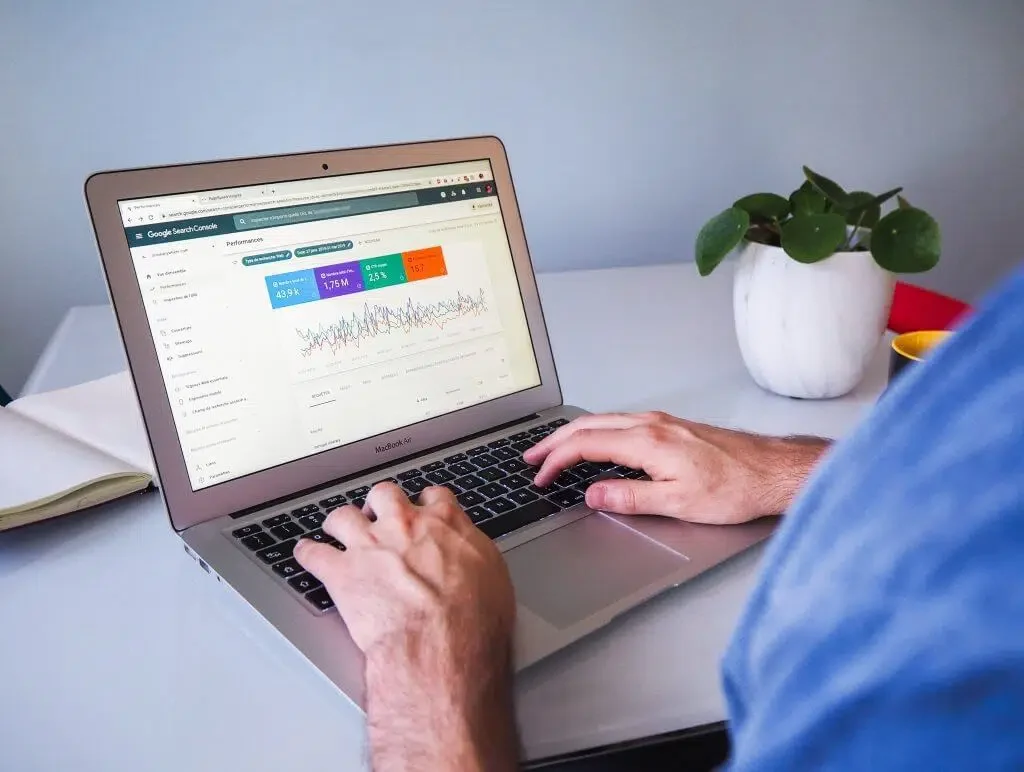
The Google Search Console is a great place to monitor your website and check various metrics regarding its health and performance. You can check your page position in Google here, too.
Open the Search results performance report, choose the date range and use page and query filters. Average position is an impression-based measure of the topmost result from your site, not a simple average of all keywords you target. Read Google’s report definitions.
Extra SEO marketing tips on how to get your website to the top of Google search for free
Whether your website is on the first page of Google or not, if you’ve implemented the above tips, you’re already ahead of the curve. Here are some extra SEO marketing tips to boost your chances of gaining that elusive Google 1st page ranking even further:
Make full use of structured data
Structured data describes visible content in a machine-readable format. Use a supported type that accurately fits the page and validate it against the current documentation.
Eligibility for a supported rich result does not guarantee display or a higher ranking. Structured data is not a way to buy or force a featured snippet, knowledge panel or AI citation.
Use Google’s Rich Results Test for supported features and inspect the published page. Correct warnings according to the applicable documentation, not by adding unrelated markup.
Implement multiple kinds of content

For some reason, we automatically think of text whenever content is mentioned. In reality, content is a massive range of things: images, videos, podcasts, slides, infographics, presentations, and even spreadsheets.
Every type can (and should) be used to engage with your audience. Users, especially in the Millenial and Gen Z age range, prefer the option to listen to your blog. They’d love to know the steps to a tutorial, but it’s more helpful to see it in a video.
So, use images in blogs, descriptions under videos, and show notes for podcasts. Just remember to follow the SEO best practices for each platform or else it won’t matter.
Use helpful internal links and cite relevant external sources
Internal links play a part in how Google determines your pages’ SERP rankings. This is because how you link your website pages determines their navigation structure, and its navigation structure determines how easily crawlable it is by Google bots.
In fact, how your pages are internally linked tells Google which pages you consider to be more important than others. Representatives of Google have even hinted multiple times over the years that a website’s internal linking scheme, in addition to anchor texts, can be considered to be a ranking factor.
Link to relevant, trustworthy external sources when they help readers verify a claim or understand a topic. Choose links for their usefulness and context rather than a fixed minimum or maximum count.
Plan the next SEO improvements
To get a crack at appearing on the first page on Google, evaluate your website to see if it meets our four checkboxes: high-quality content, technical SEO, mobile-first indexing, and high-authority backlinks. Once those are settled, you can focus on using structured data, diversifying your content type, and enhancing your site’s internal navigation structure.
If you need implementation help, discuss your SEO priorities with Ranq. Agree on the scope, measurements and review process before work begins.
Reviewed September 9, 2026. Corrected ranking guarantees, Search Console instructions, private-browser limits and structured-data claims.